
Achieving client capabilities accurately is crucial for agencies of all sizes in the fast-paced digital era. One of the mainstays of internet marketing and advertising is Google Ads, formerly known as Google AdWords. This platform provides businesses with an efficient, adaptable toolkit to engage with their target market, emphasise website traffic, and eventually boost revenue. We may go into the nuances of Google Ads in this blog article, examining its capabilities, benefits, and methods for optimising its functionality.
What is Google Ads?
Google Ads is an all-inclusive online advertising platform created by Google that allows companies, marketers, and organisations to advertise their goods, services, or content throughout a large digital network. Google's search engine results pages, partner websites, mobile apps, and websites like YouTube are all part of this network.
Fundamentally, Google Ads uses a pay-per-click (PPC) model, which means that advertisers are only billed when consumers interact with their ads—that is, when they click on them or, in the case of video ads, watch them. By choosing particular keywords, identifying target demographics, establishing budgets, and creating ad types (text, picture, video, or shopping advertisements), advertisers build campaigns. Google determines which ads are shown and in what order based on a combination of bidding techniques, ad quality, and relevancy (known as Ad Rank) when people search for relevant terms or browse content online.
Types of Google Ads:
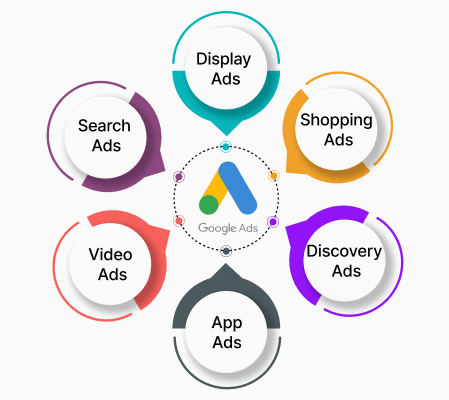
- Search Ads: These are the most common kinds of commercials and appear at the top of Google search results pages while users look for precise key terms
- Display Ads: These advertisements appear on websites for the duration of the Google Display Network, which includes thousands and hundreds of websites. They can be in the form of banners, images, or interactive ads.
- Shopping Ads: Ideal for e-exchange corporations, shopping advertisements display product images, fees, and store names in Google search results.
- Video Ads: These ads are displayed on YouTube and different Google-affiliated websites. They can be in-move commercials (gambling earlier than or at some unspecified time in the future of motion pictures) or discovery advertisements (performing in searching for outcomes on YouTube).
- App Campaigns: These campaigns promote cell apps at some stage in Google Search, the Play Store, YouTube, and the Display Network.
Key Components of Google Ads :
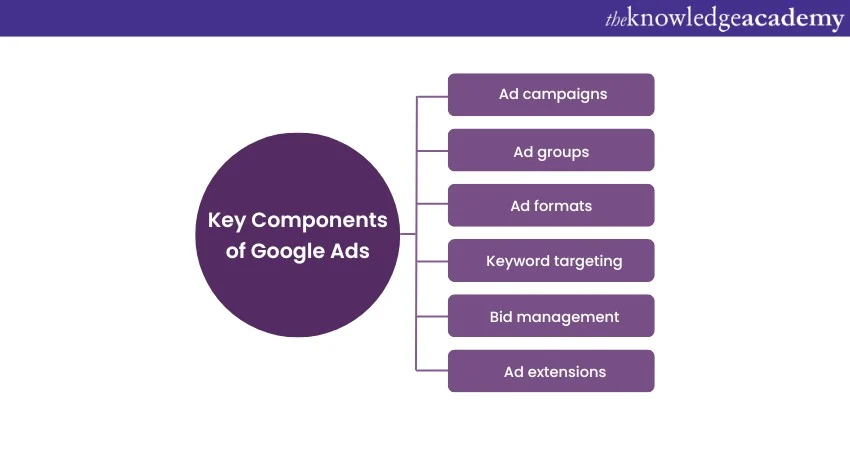
1. Campaign Structure
Google Ads is organized in layers:
- Campaigns (budget, location, goal)
- Ad groups (themes or product categories)
- Ads + keywords
2. Keywords & Targeting
Advertisers choose keywords that trigger their ads when users search on Google.
Targeting can include:
- Location
- Language
- Device
- Audience interests & behavior
3. Ad Auction System
Every time someone searches, Google runs an instant auction:
- Advertisers bid on keywords (max CPC – cost per click)
- Ads compete based on Ad Rank
Ad Rank = Bid + Quality Score + impact of extension
4.Quality Score
A critical factor that determines performance and cost. It includes:
- Expected click-through rate (CTR)
- Ad relevance
- Landing page experience
Higher quality = lower cost and better placement.
5. Bidding Strategies
You can choose how you want to pay:
- Manual CPC (you set bids)
- Automated bidding (Google optimizes for conversions, clicks, etc.)
- Target CPA (cost per acquisition)
- Target ROAS (return on ad spend)
Key Benefits of Google Ads:
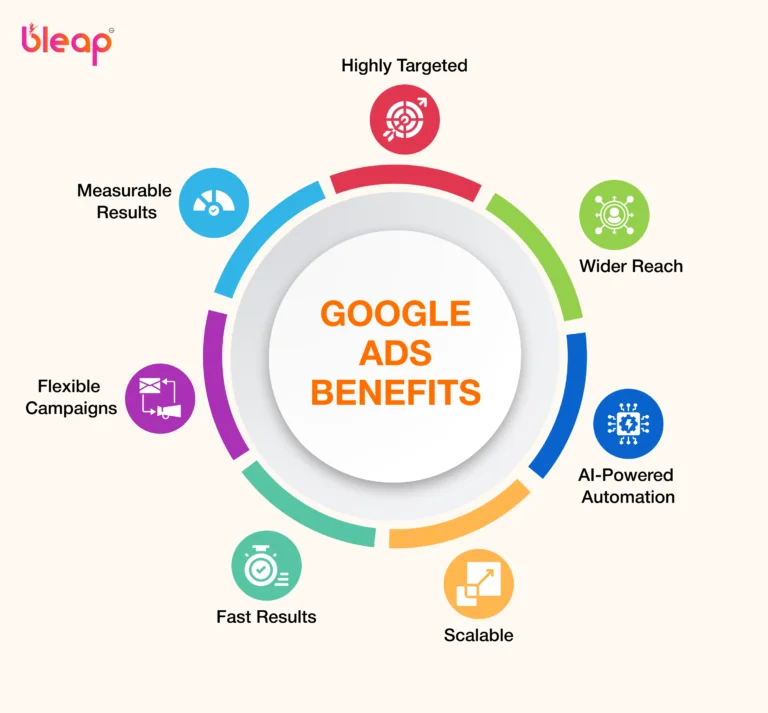
- Immediate Visibility and Faster Results: Unlike SEO, which takes months, Google Ads places your website at the top of search results immediately.
- High-Intent Targeting: Reach customers exactly when they are searching for products or services, targeting by keywords, location, demographics, and interests.
- Cost Control and Measurability: You choose your budget and pay only when someone clicks your ad (Pay-Per-Click). Detailed analytics show ROI for every campaign.
- Remarketing Opportunities: Re-engage users who previously visited your website but didn't convert, keeping your brand top-of-mind.
- Scalability and Flexibility: You can easily pause, stop, or adjust campaigns to suit your business needs, making it ideal for testing new markets.
- Diverse Ad Formats: Utilize Search, Display, YouTube, and Shopping ads to reach customers across different platforms
Importance of Google Ads:
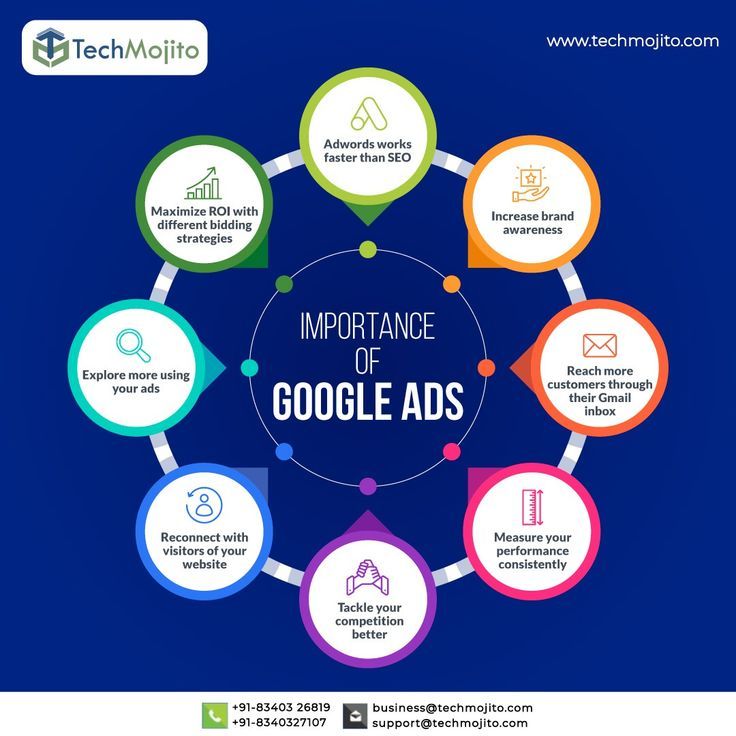
Google Ads has become one of the most important tools in digital marketing because it allows businesses to reach potential customers exactly when they are searching for products or services on Google. Its importance lies in its ability to deliver fast, targeted, and measurable results, making it suitable for businesses of all sizes.
- Instant Online Visibility:
- Google Ads helps businesses appear at the top of search results on Google almost immediately after launching a campaign, unlike SEO which takes time.
- Highly Targeted Advertising:
- It allows advertisers to target users based on keywords, location, language, device, interests, and online behavior, ensuring ads reach the most relevant audience.
- Reaches High-Intent Customers:
- Ads are shown to people actively searching for products or services, increasing the chances of conversions, leads, and sales.
- Cost-Effective Pay-Per-Click Model:
- Businesses only pay when someone clicks on their ad, making it a budget-friendly option with better control over advertising costs.
- Measurable and Trackable Results:
- Provides detailed analytics such as impressions, clicks, conversions, and return on investment (ROI), helping businesses evaluate performance accurately. Flexible Budget Management:
- Advertisers can set daily or monthly budgets and adjust them anytime based on performance and business needs.
- Multiple Advertising Formats:
- Supports search ads, display ads, shopping ads, and video ads on platforms like YouTube, helping businesses reach users in different ways.
Conclusion
Google Ads is a powerful digital marketing tool that helps businesses reach the right audience at the right time through Google and its network. With its targeted approach, flexible budgeting, and measurable results, it enables both small and large businesses to grow effectively.
By using the right strategies—such as selecting relevant keywords, creating engaging ads, and continuously optimizing campaigns—businesses can maximize their return on investment and stay competitive in the online market.